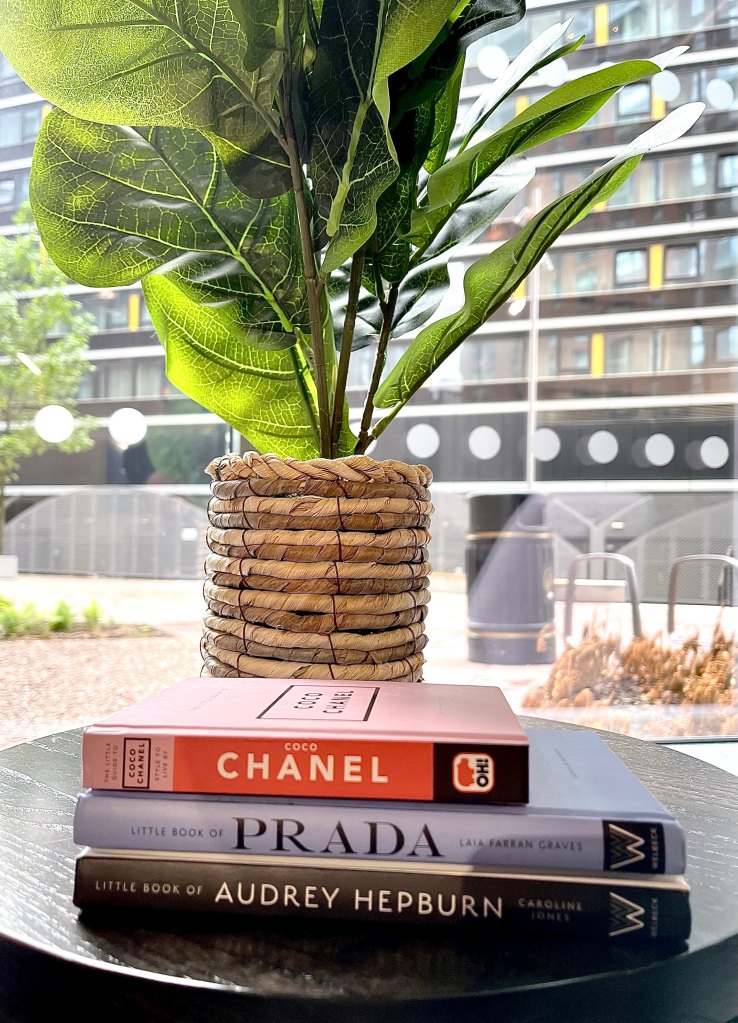
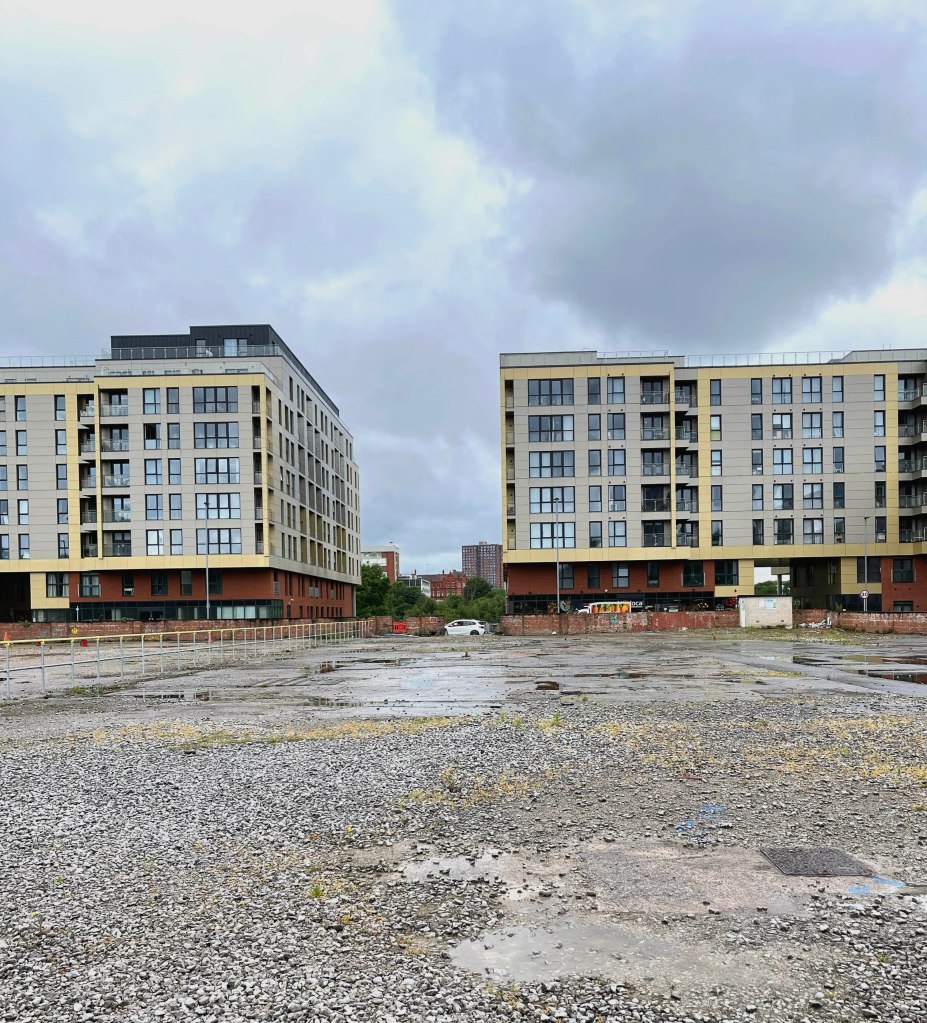
I drink coffee on the ground floor of an apartment block called Laurence Place, “the ideal home for social butterflies looking to start a new chapter”. In addition to the reception desk, gym, teleworking tables and meeting rooms the floor accommodates an inhouse café, open to the public as well as residents of the block. There is a neat array of empty seats arranged in the gravelled terrace area in front of the building, but like me, and despite peak Omicron, this morning, all the customers have chosen to sit indoors. You would have done the same because the atmosphere outside is congested with the odours of the subterranean disturbances wrought upon the area by the intense construction work; accented with the periodic rising of essence of rotting vegetation and a base note of burned fossil fuels – which I imagine is a legacy of the industrial era. Outside your lungs would also smart with the intake of freezing water vapour suspended over the gloomy triangle of Laurence Place, which unlike its online image is permanently shaded by the trio of developments overlooking it.
Today I have been walking around Greengate, the site of the first settlement of the City of Salford, which thrived on the banks of the bountiful river Irwell. These days you need to seek out the river, as it snakes around the island of new and under construction towers, lapping the redbrick underskirts of Greengate’s few remaining mill buildings, before disappearing under the dual carriage way. Once the industrialists of the 18th and 19th centuries had finished exploiting the Irwell for its energy and cleansing power, the 20th century city more or less turned its back on the river. Recently Salford’s depleted and polluted waterways have acquired a new purpose and are being subjected to a new mode of extraction: marketing in the form of digital imagery and copywriting. Along with so called amenities, like the café I am sitting in; the nebulous, but potent concept of city centre living and small dogs, the benefits of waterways help sell the new urban lifestyles, which fuel the rental sector.
The Embankment Coffee Company brand, which runs the café, makes use of its historic location on the site of Exchange station in Manchester, next to the railway viaduct and its archways. Embankment West, the area’s new name, evokes the Thames rather than the northwest railway line overlooked by apartments at the rear of the building. I order coffee and cake, from smiling staff- clearly handpicked to foster the friendly vibe – pay, and one of them brings my order to the table. The atmosphere of the café drifts somewhere between hall of residence, art gallery and hotel foyer-aspiring to luxury, but more realistically pitched at well to do students, teleworking and workaday coffeebreaks. It is also signalling home to the tenants and guests, many of whom do indeed appear to be far from theirs. The homey atmosphere seems to be working because a trio of young women, two of them with covered heads, the third with admirable, long, thick, black hair, currently sit cross legged on a rug, their noses in line with the coffee table. They comb and arrange each other’s hair, giggling and talking softly, debating their next choice of music track. The one with the black hair gets up to plug the computer in when the power is near drained. She balances the laptop on a seat near me, smiling, stretching the power cord to its limit, to maintain charging and listening.
The café interior design features denuded concrete pillars, engineered wood, lime-washed look flooring and exposed foil wrapped ducts, vaguely echoing in this 21st century tower block those art galleries and loft apartments which now occupy gentrified industrial architecture. Three kinds of images add interest to what might otherwise be an austere interior. First there is a carefully crafted, informal, arrangement of Polaroids, showing groups of residents and staff. These are pegged elegantly to a line of twine in a contrived demonstration of informality. From what I can see, the residents represented all belong to what could be termed a youthful international elite. These are children of the rich, I decide, but maybe not super rich-because surely, I debate with myself, they would have other choices, ones preferable to a hall of residence, albeit an upmarket one. Next there is a series of conventional photographs of the red brick, wrought iron, industrial era city, or at least the artistically soot etched parts of it. I am sure some of the places in the photographs no longer exist. Finally there are digital prints onto canvas, in a street art style, which combine posterized images of city streets, graffiti tags and road markings – an idealised, arty, alternative version of the city before the recent development. I can see these are professionally presented and reasonably accomplished pieces within their genre, although it is not one I am keen on. This embellishment contributes to the -inevitably shallow and inauthentic – construction of place, required to sell this form of amenity-driven city living. It mostly sanitizes the city and attempts to funk up the vague grimy hauntings of the industrial era with poster colours and graffiti and glosses over any losses which we might associate with the de-industrialization. In addition to the works on the wall there is a large flat screen tv. House plants in baskets, arranged informally amongst the settees with throws and a variety of coffee tables. Magazine racks and stands display Fashion and Lifestyle magazines, titles like Vogue and Elle, along with books such as a A Life Less Ordinary, which offers a relaxing lesson in curating your environment to bring out individuality, with chapters on reason, friendship, inspiration and vintage. Particularly relaxing if your apartment has already been furnished and ornamented on your behalf. A magazine entitled Consented (no longer in print) provides a counterpoint to Vogue and all the others. I want to say that Consented is an alternative to the flattening of all meanings, identities, and experiences in the media mangle of consumer society, which it is. Although unfortunately, it could not compete, I am still pleased Consented is there, that somebody thought of this.
Laurence Place, Greengate Jan to May 2022
 The Join